I named a whole website after the unluckiest number there is, so I owe it an explanation. Why is 13 unlucky? Nobody knows for sure, and most of the famous origin stories fall apart the moment you check them. Here is what holds up.
The next Friday the 13th is 13 November 2026. It is the third one this year, after February and March, and three is the most any year can have. If you are reading this before then, consider yourself warned.
Twelve is tidy, thirteen is not
The most common explanation is that 13 suffers from standing next to 12. Twelve is everywhere: twelve months, twelve signs of the zodiac, twelve apostles. It divides neatly by 2, 3, 4 and 6, and in folklore it tends to stand for completion. Thirteen is one past complete. Stephen Winick, a folklorist at the Library of Congress, put it this way: after 12, "13 comes along and it's kind of a dud." He is also clear that there is no concrete evidence this is where the fear began. It is a good guess, not a proven one.
The famous stories, checked
Four stories come up again and again. Here is how each one holds up.
- The Last Supper. The Gospels put Jesus at the table with his twelve disciples, 13 people in all, on the night before the crucifixion, and Christian tradition places the crucifixion on a Friday. But the popular detail that Judas was the 13th to sit down is not in the Bible, which never gives a seating order.
- Loki and the twelve gods. A favourite version says twelve Norse gods sat down to dinner in Valhalla, Loki arrived uninvited as the 13th guest, and he arranged the death of the god Baldr. Baldr's death is a real Norse myth, but the medieval sources, the Poetic Edda and the Prose Edda, describe no dinner party and give no count of 13. The dinner looks like a modern retelling.
- The Knights Templar. King Philip IV of France really did have the Templars arrested at dawn on Friday 13 October 1307. But nobody seems to have linked that event to Friday the 13th until the 20th century, and the 2003 novel The Da Vinci Code made the link famous.
- The Code of Hammurabi. The Babylonian law code is said to skip law 13. It cannot: the laws are not numbered on the original stone, so any "missing 13" is modern.
What is actually on record
- Friday had a bad name first. Friday was thought unlucky for journeys and new starts in parts of Europe from at least the Middle Ages; Chaucer mentions it. Separately, by the 1700s people recorded the belief that if 13 sat down to dinner, one of them would die within the year, later tied to the Last Supper.
- The two meet in France. The earliest clear references to an unlucky Friday the 13th that folklorists have found are French, from 1834: a Paris magazine line blaming "Fridays and the number 13", and a play whose hero blames all his misfortunes on being born on Friday, 13 December.
- Rossini. The composer Gioachino Rossini died on Friday 13 November 1868. His English biographer, H. Sutherland Edwards, wrote that if it was true that Rossini thought Friday unlucky and thirteen an unlucky number, "it is remarkable" that he died on that day.
- Wall Street, 1907. Thomas W. Lawson's novel Friday, the Thirteenth came out in February 1907, and its plot turns on a stock market panic on that date. It is often named as the origin, but it cannot be: its characters already call the date "the Wall Street hoodoo-day". The book spread the idea; it did not invent it.
So the honest summary: Friday and 13 were each considered unlucky long before anyone put them together, they became one unlucky date in France in the early 1800s, and the idea reached English-speaking countries later that century.
The words for the fear
Triskaidekaphobia is the fear of the number 13, from the Greek for "thirteen" and "fear". It is usually dated to the psychologist Isador Coriat's book Abnormal Psychology (1910), where it sits in a list of phobias between the fear of dirt and the fear of railroads. It is in print two years earlier too: Religion and Medicine, a 1908 book on nervous disorders that Coriat wrote with Elwood Worcester and Samuel McComb, lists "triskaidekaphobia, fear of the number 13".
Paraskevidekatriaphobia, the fear of Friday the 13th in particular, is built from the Greek Paraskevi (Friday) and dekatria (thirteen). The word is credited to Donald Dossey, a psychotherapist who works with a phobia institute in North Carolina.
Where did the 13th floor go?
In many tall buildings the lift buttons go from 12 to 14, or to 12A. In 2002 Dilip Rangnekar of the lift maker Otis estimated that 85 percent of the buildings with 13 or more floors and Otis lifts had no floor numbered 13. The floor is still there; only the label is gone. The worry behind it is real but small: in a 2007 USA Today/Gallup poll, 13 percent of Americans asked said a room on a hotel's 13th floor would bother them, and 9 percent said they would ask for a different room.
Not unlucky everywhere
In Italy the unlucky date is Friday the 17th, not the 13th. In Spanish-speaking countries it is Tuesday the 13th. Some places even claim 13 as their own: Colgate University traces its start to 1817, when 13 men met in Hamilton, New York, and, the story goes, backed the plan with 13 dollars and 13 prayers. That is why 13 is a lucky number at Colgate.
Is Friday the 13th actually more dangerous?
A 1993 BMJ study compared Friday the 13th with Friday the 6th in part of southern England and found fewer cars on the M25 but more hospital admissions from transport accidents (65 against 45). It closed with "Staying at home is recommended." The numbers were small. Bigger studies since have found little or nothing: a 2012 study of about 49,000 emergency department visits found no rise in overall visits on Friday the 13th (one of the 13 conditions it checked, penetrating injuries, did go up), and a 2024 study of nearly 20,000 surgery patients found that people operated on that day did no worse than people operated on ordinary Fridays.
Why Arena13 is built on 13
Arena13's slogan is "You're the Unluckiest Player alive", and the number is in the games, not just the name:
- The logo is a crimson 13 with a crack running through the 3.
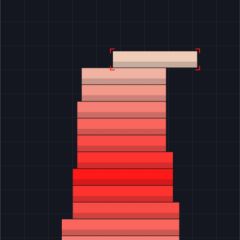
- In Headcounts, a crowd runner, land on exactly 13 runners and the screen says "13. Unlucky." and flips the next gate: a minus becomes a plus, a divide becomes a multiply, and a good gate turns bad, so time it. The road ends with a boss and then 13 steps, and if your crowd reaches step 13, your survivors count three times.
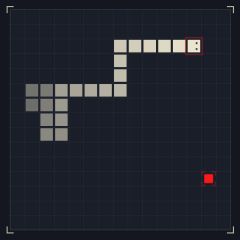
- 13 Ways to Die is an escape game with exactly 13 deaths to find, and finding all of them opens a secret ending.
- In Pyramid Solitaire you clear cards in pairs that add up to 13, and kings, worth 13 on their own, go by themselves. The full rules are in how to play Pyramid Solitaire.
So no, I am not superstitious. I just built a whole site to make you meet 13 as often as possible. Play a round on Friday 13 November. If it goes badly, you know what to blame.
How it was made
I wrote this with help from Claude, an AI assistant, and checked every historical claim against the sources linked below. If you have a better source for any of it, please tell me.
Sources
- Stephen Winick, On the possible origins of Friday the Thirteenth, Library of Congress, Folklife Today, 2024
- NPR, The possible origins of Friday the 13th and other unlucky days, 2024
- Wikipedia, Friday the 13th, Triskaidekaphobia, Thirteenth floor and Knights Templar
- H. Sutherland Edwards, The Life of Rossini, Project Gutenberg
- Thomas W. Lawson, Friday, the Thirteenth (1907), Project Gutenberg
- Isador H. Coriat, Abnormal Psychology (1910), Internet Archive
- Elwood Worcester, Samuel McComb and Isador H. Coriat, Religion and Medicine (1908), Internet Archive
- Wiktionary, paraskevidekatriaphobia
- ABC News, Fear of Friday the 13th and other unpronounceable phobias, 2012
- Gallup, Thirteen percent of Americans bothered to stay on hotels' 13th floor, 2007
- Colgate University, History of the university
- Scanlon and others, Is Friday the 13th bad for your health?, BMJ, 1993
- Lo and others, Answering the myth: use of emergency services on Friday the 13th, American Journal of Emergency Medicine, 2012
- Ranganathan and others, Superstition in surgery: surgery on Friday the 13th and postoperative outcomes, Annals of Surgery Open, 2024