Most of what I make is loud. Arena13 is a site of daily game battles, and its slogan calls you the unluckiest player alive. Then I wanted to make something that was not about a score at all.
The Last Train Home is a free interactive story set in the summer of 1947, when Punjab was divided between India and Pakistan. Estimates of how many people crossed the new borders in the months around Partition range from about 10 to 20 million. The story follows a few of them onto the refugee trains, and your choices decide who makes it home.
Why trains
Railways became one of the main routes of escape. The Partition Museum estimates that 700,000 refugees travelled by train between 15 August and 8 September 1947 alone. People packed into compartments, goods wagons, doorways and roofs. Some trains arrived carrying the wounded and the dead, and they are still remembered as the ghost trains of Partition.
A train is also a good place for a story about choices. It is crowded, it moves whether you are ready or not, and every hand reaching up from the platform is a decision.
What I got wrong at first
The voice
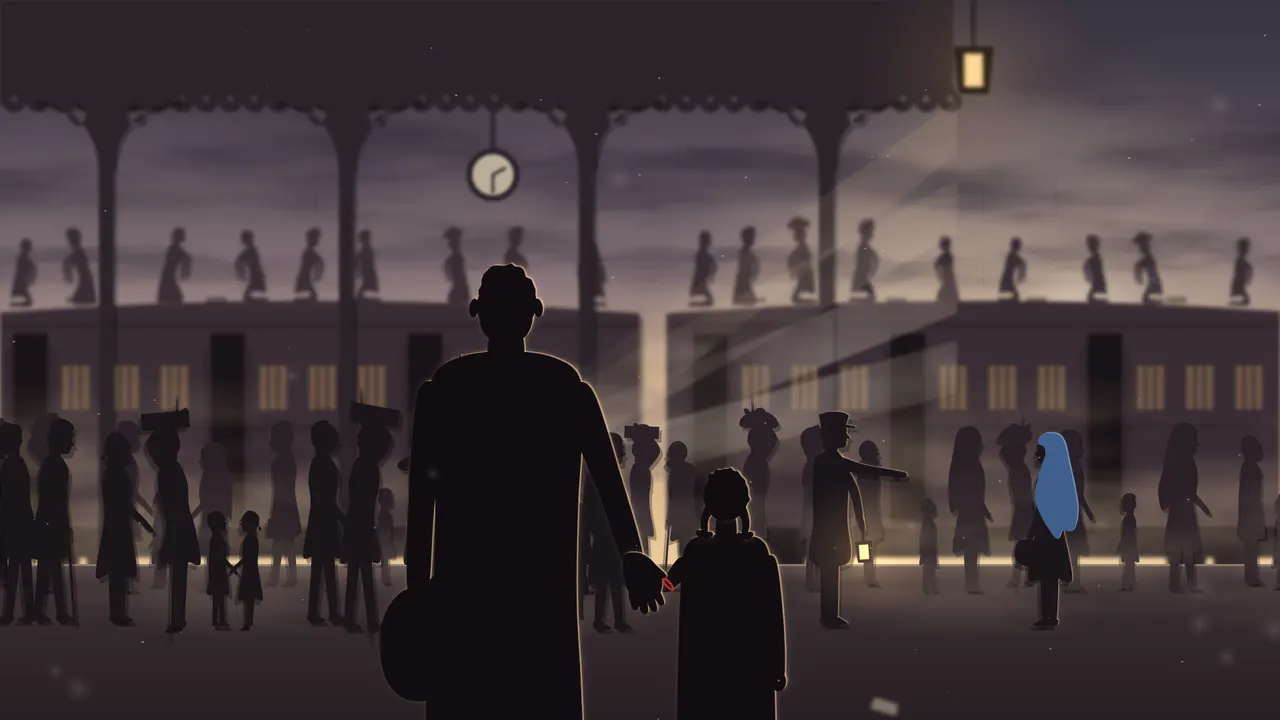
The first decision was the one I nearly got wrong. Everything else on Arena13 taunts you: "Unlucky. Again." A story about Partition told in that voice would read as mockery. So the story got its own look and its own sound: cut-paper scenes, a serif type, slow sound beds, and no scores, coins, taunts or ads anywhere inside it.
The names
One draft gave the characters short, punchy names borrowed from the game site's cast. They did not belong in 1947, and they made the people feel like characters in a game. In the first chapter you are just "you". Your little sister is Choti, a common nickname for the youngest girl in a family. The guard, the woman and the boy have no names, and no community is named. In the second chapter you play Amina, a girl in a Muslim family travelling west. Her little sister is also called Choti, on purpose: every family had one.
The facts
I wrote a history page to sit beside the story, and its first draft had mistakes. It gave the migration a single number when sources give a range of about 10 to 20 million, and it told the evacuation story too simply. In fact India and Pakistan each set up a Military Evacuation Organisation in early September 1947. Checking every claim against the Partition Museum, the Nehru Archive, the 1947 Partition Archive and the UK National Archives fixed those, and the page now ends with a plain list of what in the story is true and what is invented.
The violence
Partition was violent, and a story that looks away from that is not honest. But there were rules I kept to. No community is ever shown as the aggressor. Chapters 2 to 5 show violence and blood, so they sit behind an 18+ gate with a content note. Sexual violence, which was part of the real history, is never shown, suggested or described.
How the story plays
There are five chapters, each told from someone's point of view. You read short lines, make choices, and most chapters have one small trial taken from a game on the site: stacking signal plates in the first chapter, holding a cord and letting go on a count of ten in the second. Each chapter has more than one ending, and later chapters remember what happened in earlier ones. A boy you saved, or did not save, may be standing on the next platform.
The scenes are painted in code, layer by layer, with fog, smoke, light and depth of field. There are no generated images. Only two things in the whole story are bright: a red thread and one woman's blue shawl.
How it was made
I want to be clear about this. I wrote the first drafts of the script with ChatGPT, then reshaped them with Claude, an AI assistant, which also wrote the code that plays the story and paints the scenes. The decisions about tone, names, violence and what the story would never show were mine, and every historical claim on the history page was checked against the sources listed there.
What is still open
I am asking Punjabi readers from Hindu, Muslim and Sikh families, ideally families who lived through 1947, to read all five chapters. If you are one of them and something rings false, please tell me. I would rather fix it than defend it.
Start with Chapter 1, The Weight of a Hand. It is free, runs in your browser and needs no account. The real history is on the Partition of Punjab page.