The moral, explained
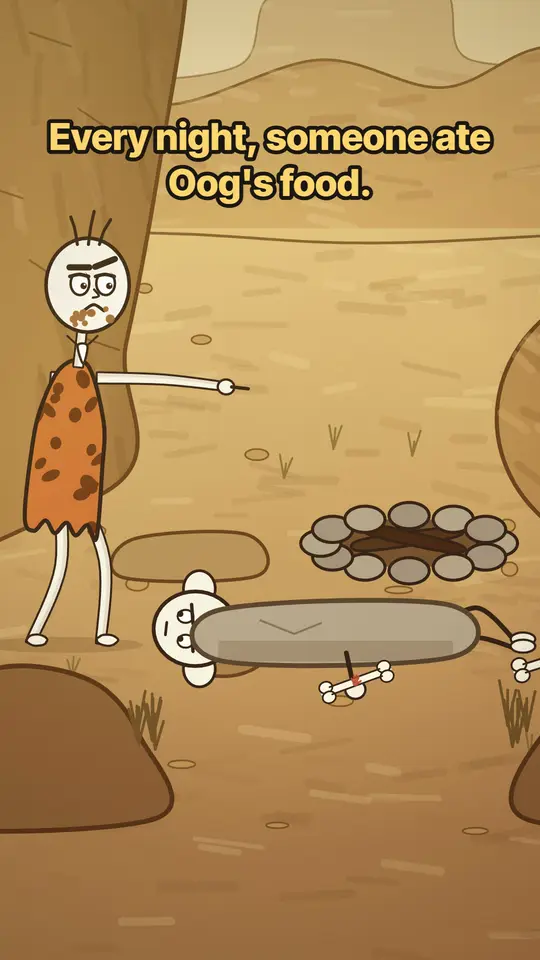
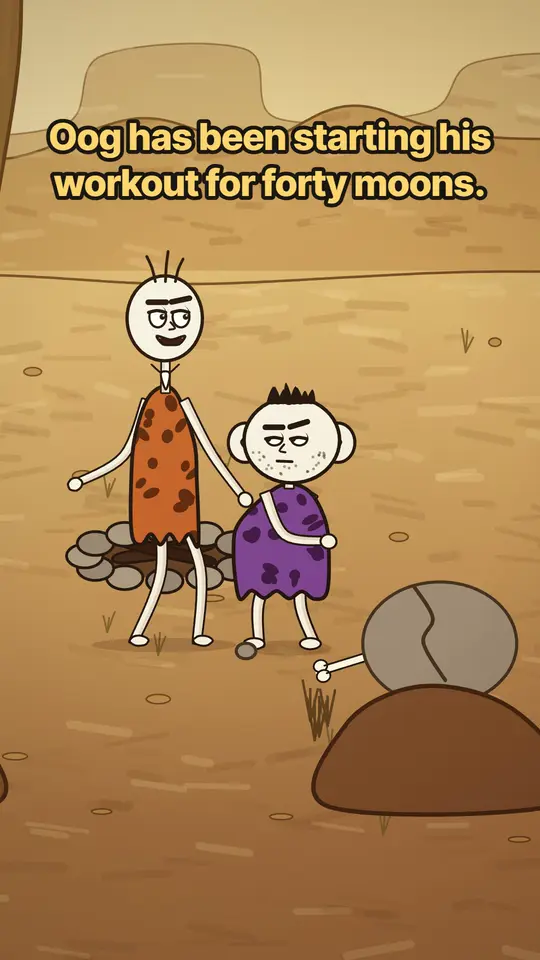
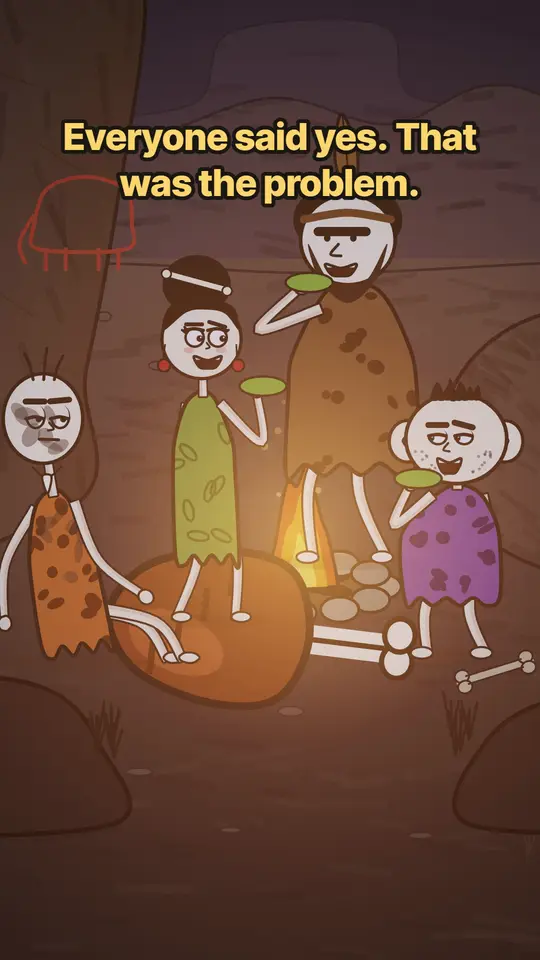
Outside there were sabre-tooths, and cold, and rain. So Oog never went out. His friends went hunting, swimming, dancing; Oog stayed in, safe. Forty years later he finally peeked out. There was a festival. There had always been a festival. Oog danced for the first time, and behind him his safe cave fell down. It had been cracking for forty years.
"It is not death that a man should fear, but he should fear never beginning to live" means that the real risk isn't the danger outside, it's the life you never start while you wait to feel ready. Staying in feels safe because nothing visibly goes wrong. But nothing visibly goes right either, and the years pass just the same. The cave is anything you hide in: a job you've outgrown, a town, a routine, an "I'll do it when things calm down".
And the cave was never as safe as it felt. Watch the reel again: the cracks are there in the very first shot.
Who really said it?
It's a shortened, modern version of a real passage. In the Meditations, Book 12, section 1, Marcus Aurelius tells himself not to fear that he must one day stop living, but to fear never beginning to live according to nature. In George Long's 1862 translation: "if thou shalt be afraid not because thou must some time cease to live, but if thou shalt fear never to have begun to live according to nature". The popular version drops the last part, "according to nature", which for a Stoic meant living by reason and virtue, not just living boldly.
Try this today
Name one festival you've been skipping: a class, a trip, a call, a conversation. Put a date on it this week. Small is fine. The point is to step outside once.
Talk about it
What would you do this year if you weren't scared?